In today’s fast moving competitive world all want to be ahead of the curve, ahead of their competitors. On some special occasion the need arises surely to be ahead of the curve but certainly not all the times. Stressing oneself leads to tremendous loss of vital energy and many in current era doesn’t really knows how to acquire this energy. Some of the most common problems of modern era have the solutions in the traditional way of living adopted by Yogis of yore. Traditionally, in order to achieve perfect relaxation, three methods are used by yogis. The three methods are physical, mental and spiritual. No relaxation is complete until one reaches the stage of spiritual relaxation.
Physical Relaxation
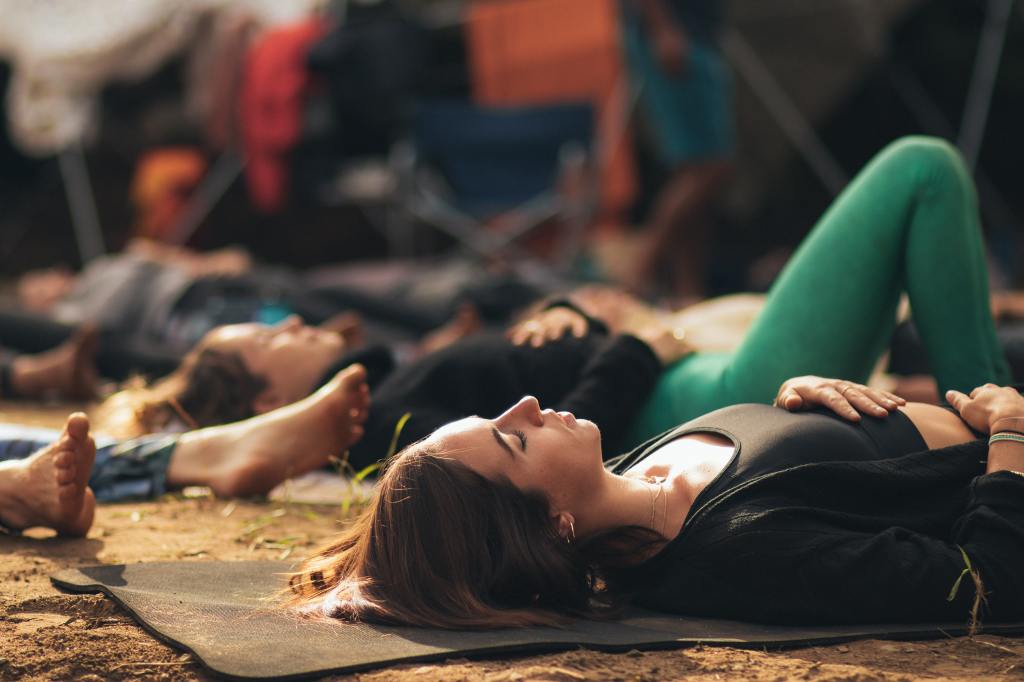
Every action is the result of thought which originates in the mind consciously or subconsciously. Thoughts take the form of action and there is a reaction in the body. When we want to perform an action, a thought is generated in the mind and transmitted to the brain. The brain telegraphs the message through the nerves and the muscles contract. Just as behind muscular contraction there is thought, so also behind relaxation there is thought. Just as we send a message to contract the muscles, so also can we send a message to relax the muscles. But as we have no control over such ‘involuntary’ organs as the heart, lungs, liver, brain etc., we cannot directly send the thoughts for relaxation to these organs. Yet they too need rest.
Here yogis use the subconscious mind, which controls all the autonomic functions of the involuntary organs. During this process of relaxation, the conscious mind sends a message to a particular organ, such as the heart or liver. This message is received by the subconscious mind and the order is immediately carried out. This relaxation technique is known as autosuggestion. Using this technique one can relax all the involuntary organs in the body. We start from the toes up to the eyes and ears, instructing each part of the body to in turn. Then messages are sent to the kidneys, liver etc. to relax, ending in the brain and the mind.
Mental Relaxation
The constant tension put on the mind owing to unnecessary worries and anxieties takes away more energy than physical tension. During mental tension breathe slowly and rhythmically for a few minutes focussing on each inhalation and exhalation. Slowly the mind will calm down.
Spiritual Relaxation

We cannot completely remove all tension and worry unless we reach a state of spiritual relaxation. However we try to relax the mind. As long as we identify with the body and mind there will be worries, sorrows, anxieties, fear and anger. Yogis know that unless we can withdraw from identification with the body and senses and separate ourselves from ego-consciousness, we will not be able to relax totally. From the state of mental relaxation the yogi draws the mind within and identifies with the all-pervading, all-powerful, all-peaceful Self, or pure consciousness, the source of power, knowledge, peace and strength.
We have fallen prey to the negative emotions of the mind through identification with body and mind and the only way to free ourselves from their clutches is by asserting our real nature that is ‘I am Pure Consciousness or Self.’ Identification with the Self completes the process of relaxation.
Reference – Inspired from Swami Sivananda and his lineage
 DivineSoulCare
I generally do cardio and HIT, but sometimes I do Yoga for some mental peace and body relaxation and I really feel good after doing the asanas. I do pranayama daily and it’s really helping my mind to remain calm. Great blog, Kudos
LikeLiked by 1 person
Thanx, keep doing you will experience great changes physically and mentally both. Stay healthy and safe !!!
LikeLike