


Yoga is a complete science of self-discipline. Yoga balances, harmonises, purifies and strengthens the body, mind and soul of the practitioner. It shows the way to perfect health, perfect mind control and perfect peace with one’s self, the world, nature and God. Millions of people have begun to practice yoga through the application of simple time-tested techniques.
Yogis say that we were not born merely to be subject to pain, suffering, disease and death. There is a far greater purpose in life. But the spiritual investigation of life’s purpose requires a keen and strong will, the products of a healthy body and mind. For this reason, the ancient sages developed an integral system to ward off or retard the decaying catabolic process, and to keep the physical and mental faculties strong. By closely observing the life-style of the modern men and women of this planet I have synthesised the ancient wisdom of yoga into five basic principles, which can be easily incorporated into everyone’s own pattern of life. These principles are: 1) Proper exercise or Asana 2) Proper Breathing or Pranayama 3) Proper relaxation or Savasana4) Proper diet or Vegetarian and 5) Positive Thinking & Meditation or Vedanta &Dhyana.
Five Key Principles of Yoga
1. Proper Exercise (Asana)

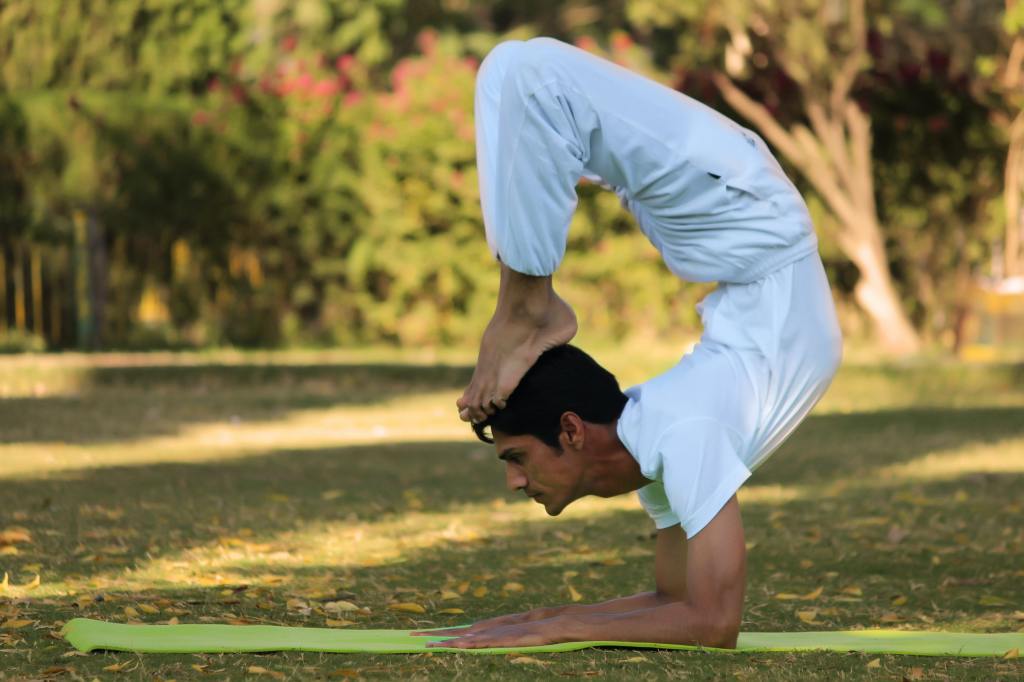
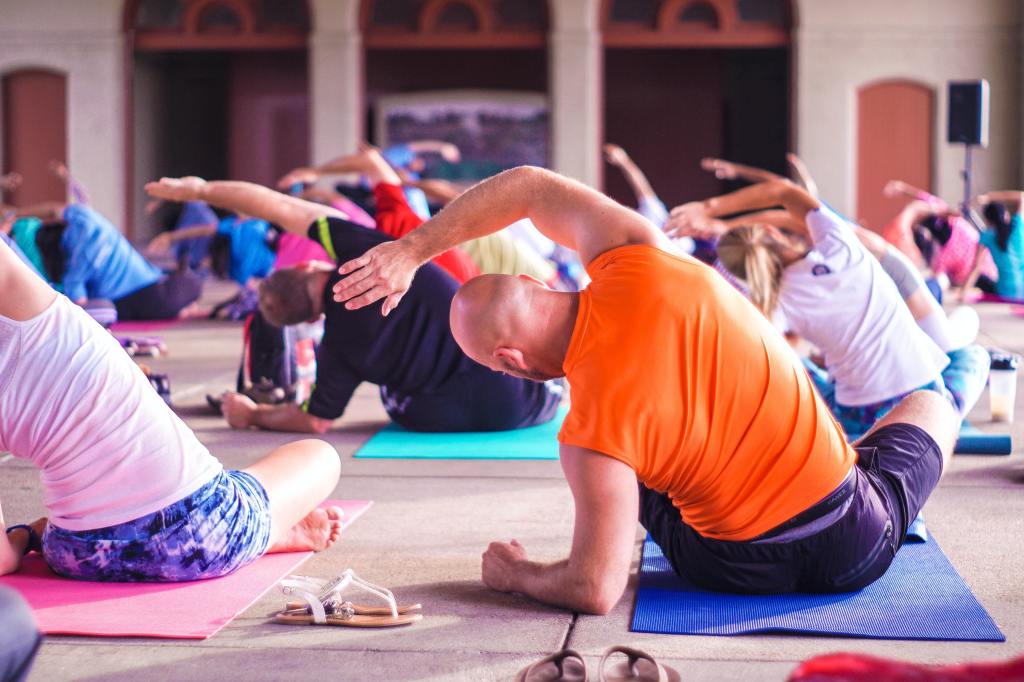
Yoga regards the body as a vehicle for the soul on its evolutionary journey. Accordingly, yogic physical exercises or asana, meaning steady pose in Sanskrit, are designed to develop not only the body but also the mind and spirit. Performed slowly and consciously, each asana is a physical exercise resulting in increased flexibility and strength, as well as an exercise in concentration and meditation.
Yogis understand that the body is as young as it is flexible and yoga asanas stretch the entire body, toning the muscles, joints, spine and skeletal system. The postures stimulate the internal organs and glands and invigorate and energise all bodily systems, including the nervous, circulatory and immune systems, resulting in radiant physical health.
On the mental level there is an increase in concentration, emotional balance, vitality, contentment, calmness and a sense of being grounded. And on a deeper level still the asanas expand our consciousness and awareness of our connection to the universe.
The benefits of practicing asanas on all aspects of our physical health and mental and spiritual well-being are now universally acknowledged as far-reaching and wide-ranging.
2. Proper Breathing (Pranayama)



Breath is life. Yoga teaches us how to use the lungs to their maximum capacity and how to control the breath to increase vitality and enhance mental clarity. Pranayama (control of the life force-known as prana in yoga) is the practice of specific breathing techniques that increase oxygen intake and encourage the absorption of prana into the body’s subtle energy channels (nadis) and energy centres (chakras). By controlling the prana through the breath the mind is rendered calm and clear and we experience increased energy, well-being and peace of mind. Pranayama connects the body with its ‘battery’ the solar plexus. Tremendous potential energy is stored here. When tapped through the practice of pranayama this energy is released for physical and mental rejuvenation. Pranayama is one of the most important practices in yoga. Through the practice the yogi is able to control the nervous system and obtains gradual control over the mind. Yogis have known for thousands of years that if we control our breathing patterns we can control our mind.
3. Proper Relaxation (Savasana)



When the mind and body are continually overworked their efficiency diminishes. Relaxation is nature’s way of recharging. Yoga emphasises the importance of proper relaxation as a way to regulate our energy and create a sense of balance to enhance our physical and mental health. Three methods of relaxation are used by yogis—physical, mental and spiritual. For physical relaxation we lie in savasana (corpse pose) and use autosuggestion to send a message to each part of the body in turn to relax. To relax the mind we use the practices of pranayama, the concentration of the mind and positive thinking. A distracted mind is always anxious. In spiritual relaxation we withdraw inwardly in the practice of meditation, detaching from our emotions and thoughts. We practice living in the present, welcoming life’s demands with strength and courage. Ultimately we are able to free ourselves from our identification with body and mind to identify with the Self or pure consciousness.
4. Proper Diet (Vegetarian)



A yogi eats with awareness, choosing food that has the most positive effect on the body and mind and the least negative impact on the environment and other beings. Yogis eat to supply the body with vital energy and keep the mind peaceful and calm and advocate a vegetarian diet as the best way to sustain mental and physical health. A simple and natural diet based on seasonal, local and organic fruits, vegetables, grains, nuts, seeds, legumes and dairy optimises physical and mental health and fosters harmony with the world around us. Yogis know that food has a subtle effect on the mind. Full of prana a pure, moderated diet is the best possible guarantee of physical and mental health, bringing harmony and vitality to body and mind. Yogis approach food from the standpoint of its energy. Yoga tells us that there are three energies or qualities of which nature is composed. The foods with the energy of tamas are ones that have a deleterious effect on the mind and body, engendering anger, depression and negativity as well as physical illness. Foods such as meat, alcohol, fish, tobacco, onions and garlic, stale, over-processed (junk foods) fall into this category. Foods that are spicy, bitter, sour, dry or salty destroy the mind-body equilibrium are considered rajasic, stimulating the senses and making the mind restless and difficult to control. Coffee, tea, eggs, salt and chocolate are considered to fall in this category. Foods such as cereals, fresh fruit and vegetables, pure oils, dairy, legumes, nuts, seeds and herbs are considered to have the purest energy (sattva) and will generate a healthy body and a clear, peaceful mind.
5. Positive Thinking & Meditation (Vedanta &Dhyana)



Our thoughts define who we are. Yoga teaches us that every thought we have has an impact on us personally as well as the world around us. An optimistic outlook and the ability to focus create uplifting vibrations and healthy, peaceful and joyful life. Yoga teaches us to strive to maintain a positive and serene mind by following the teachings of Vedantic philosophy, a philosophy that teaches the unity of all creation or oneness of consciousness, and the practice of meditation—keys to achieving peace of mind and elimination of negativity in our lives. The lives we live and the type of experiences we have are the direct results of the way we think. Once we master the art of positive thinking, we are happy, harmonious and peaceful, and our ability to comprehend higher truths as well as to maintain a powerful meditation practice will follow.
Reference – An Inspiration from Swami Sivananda and his Lineage..
 DivineSoulCare
One thought on “Yoga – Strengthen Body-Mind-Soul”